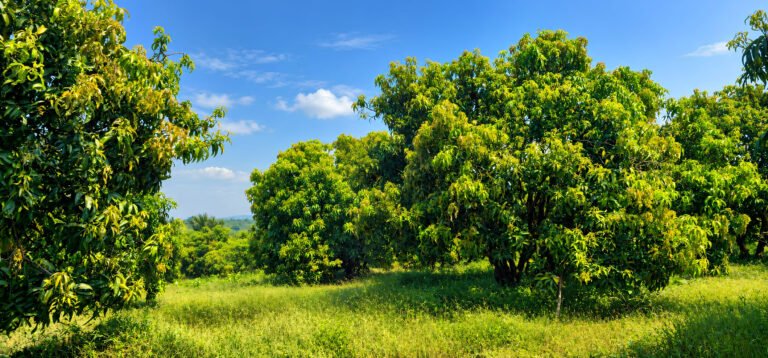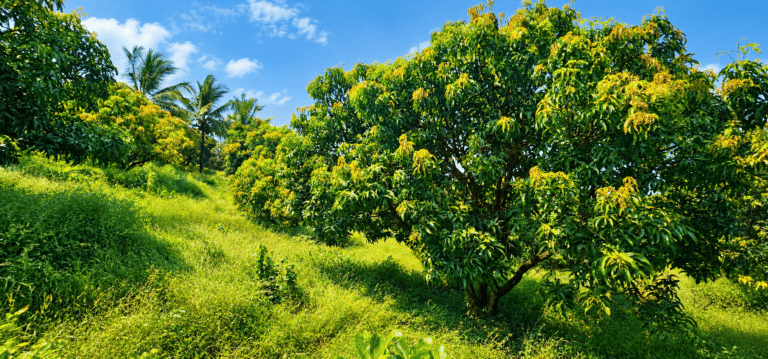
India is a nation of investors – we obsess over FDs, equities, and apartment flats. But there is a quiet revolution underway among India’s most financially astute families: they are buying farmland, and more specifically, mango farms along the Konkan coast of Maharashtra. Agricultural investment in India is no longer a niche idea reserved for landed families or retiring farmers – it is fast becoming the smartest portfolio move for urban professionals, NRIs, and high-net-worth individuals who want returns that go beyond a number on a screen. The reasons are compelling, layered, and deeply rooted in both economics and lifestyle. This article unpacks eight powerful reasons why investing in agricultural land – particularly on the Konkan belt – may be the single best financial and personal decision you make in 2025.
1. Tax-Free Income from Your Harvest
Here is something most urban investors don’t know: every rupee you earn from the sale of agricultural produce is legally exempt from central income tax in India. This is precisely what makes agricultural investment in India one of the most tax-efficient wealth strategies available today. Under Section 10(1) of the Income Tax Act, 1961, agricultural income – whether from crops, rent from agricultural land, or the sale of farm produce – is fully excluded from your taxable income. There is no upper limit on the amount.
To put this in perspective: if you are in the 30% income tax bracket and you earn ₹12 lakh annually from the sale of Alphonso mangoes from your farm, that is ₹12 lakh you keep entirely – zero tax. Compare that to fixed deposit interest or stock dividends, which are taxed at your slab rate. Rural agricultural land also enjoys full exemption from capital gains tax upon sale, under Section 10(36) of the Act.
Key Stat: A salaried individual earning ₹5 lakh from employment and ₹2 lakh from their agricultural land pays income tax only on the ₹5 lakh employment income. The farm income is invisible to the taxman. It is one of the clearest advantages that agricultural investment in India holds over every other asset class – your harvest income simply does not exist for the Income Tax Department.
2. Mangoes from Your Own Farm – A Luxury You Eat
Imagine walking through your own mango orchard in April, hand-picking Alphonso mangoes that smell like nothing you have ever bought in a supermarket. This is not a fantasy — it is a standard weekend experience for Konkan agricultural land owners, and one of the most personally rewarding outcomes of agricultural investment in India.
A mature Alphonso tree yields between 100 and 200 kg of fruit annually in a good season. A plot with even 25 trees gives you a personal harvest of 2,500–5,000 kg of the finest mangoes on earth – enough to distribute to family, gift to clients, and sell the surplus at premium prices. With managed farm models now available (where professional agronomists handle cultivation on your behalf), you don’t need to know anything about farming to benefit from this.
India produced over 25 million metric tonnes of mangoes in FY2025 – nearly 45% of the world’s total supply – and Alphonso from the Konkan coast remains the country’s most prized, most gifted, and most exported premium variety. No other agricultural investment in India puts this kind of tangible, seasonal luxury directly in your hands.
3. Alphonso Commands Premium Prices and High Resale Value
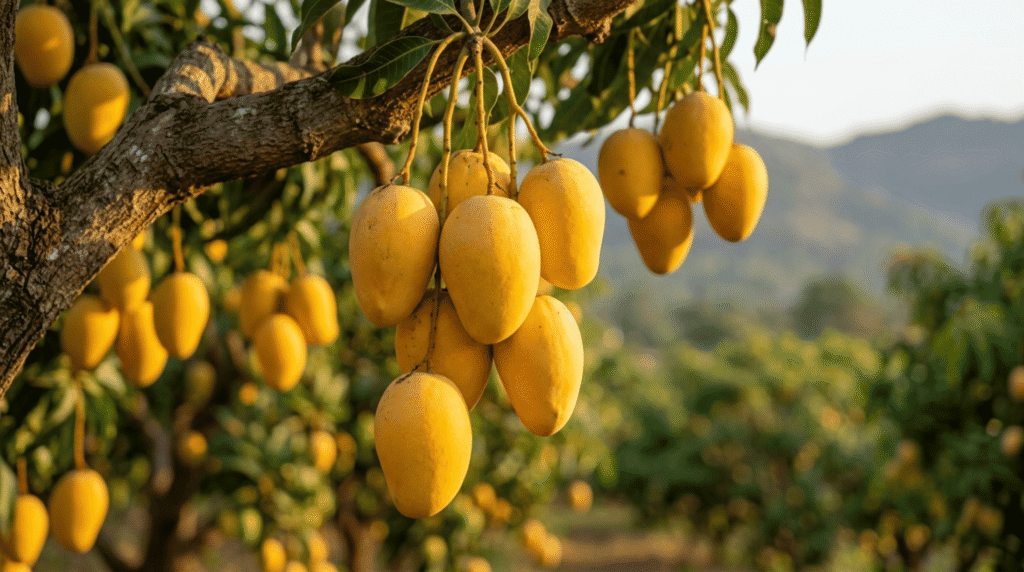
Not all mangoes are created equal. The GI-tagged Alphonso (Hapus) from Ratnagiri and Devgad in the Konkan belt commands prices that no other variety in India comes close to matching.
Current Market Pricing (2025–26 season):
- Premium/Jumbo Grade (naturally ripened, GI-certified): ₹1,200–1,800 per kg
- Medium Grade: ₹900–1,500 per kg
- Jumbo dozen boxes: ₹2,000–3,000 per dozen
- Export price to Europe: USD 4,500+ per metric tonne in premium seasons
In 2024–25, India exported USD 11.9 million worth of fresh Alphonso mangoes, with the USA alone importing USD 4.4 million of that total. Alphonso consistently commands 20–30% higher prices than any other Indian mango variety. Even in a low-yield distress year (as 2026 proved to be, with production dropping 60–85% due to erratic weather), the scarcity simply pushed prices higher — single premium-grade fruits retailed at ₹300 apiece in Mumbai markets.
A managed mango agricultural land plot in Ratnagiri district with a 2.5-acre orchard can generate an annual mango income of ₹8–10 lakh — entirely tax-free.
4. Breathe Easy: The Konkan Has India’s Cleanest Air
India’s average PM2.5 concentration in 2025 stood at 48.9 µg/m³ (an AQI of 134, classified as “Unhealthy for Sensitive Groups”), nearly 9.78 times higher than the WHO annual guideline of 5 µg/m³. For anyone yseriously considering agricultural investment in India, air quality is not a soft lifestyle perk — it is a hard health argument.
City-by-city reality check:
- Delhi: AQI regularly spikes to 491 (“Severe Plus”) in the winter months. November 2024 saw AQI readings of 1,200 – the Supreme Court once described Delhi’s air as “worse than narak.”
- Mumbai: Annual average PM2.5 of 45.3 µg/m³, ranked among the most polluted cities globally.
- Ratnagiri (Konkan coast): AQI consistently in the 30–65 range – classified as Satisfactory to Moderate. Sea breezes, dense forest cover, zero heavy industry.
Owning agricultural land in the Konkan is not just a financial asset – it is a clean-air asset. For families with children, seniors with respiratory conditions, or anyone who values longevity, the air alone justifies the investment. Studies consistently link long-term exposure to high PM2.5 to lung disease, cardiovascular events, and neurological damage. The Konkan’s coastal microclimate is one of the last genuinely clean environments within driving distance of India’s biggest cities — and that scarcity is precisely what makes agricultural investment in India’s Konkan belt so compelling for health-conscious urban families.
5. Land Price Appreciation Driven by Maharashtra’s Infrastructure Boom
Coastal Konkan is in the midst of the most significant infrastructure transformation in its history, and agricultural land prices are responding accordingly.
Key infrastructure catalysts:
- Shaktipeeth Expressway (₹1 lakh crore project): An 802-km expressway from Nagpur to Goa that dramatically cuts travel time across Maharashtra’s entire coast, directly impacting the Konkan belt.
- Mumbai–Goa Coastal Highway upgrades and Konkan Railway improvements reducing Mumbai–Dapoli travel to under 3 hours.
- Chipi Airport (Sindhudurg) operationalised, connecting South Konkan to Mumbai and other cities by air.
- Reliance Industries’ 1,000-acre development project near Dapoli — already driving a speculative premium in surrounding agricultural land markets.
Developers active in the region project 15–20% annual appreciation over the next five years in Dapoli and surrounding talukas. Managed NA agricultural land plots in Dapoli that were priced at ₹12.5 lakh are now being re-listed at 30–40% premiums. In Ratnagiri, sea-view agricultural plots with mango orchards have listed at ₹2 crore for 2.5 acres — with annual mango income of ₹8–10 lakh built in.
The convergence of tourism, infrastructure, and remote work adoption has made coastal Konkan one of Maharashtra’s fastest-appreciating agricultural land markets — at a fraction of Mumbai or Pune prices.
6. A Safer, More Stable Investment than Stocks or Fixed Deposits
Indian retail investors have long defaulted to two options: equity markets (volatile, emotionally exhausting) or fixed deposits (safe, but increasingly unattractive). Agricultural land — especially managed mango farm plots — offers a third way that outperforms both on multiple dimensions.
How agricultural investment in India stacks up:
| Parameter | Agricultural Land (Konkan) | Equities / Stocks | Fixed Deposit |
|---|---|---|---|
| Income Tax | Tax-free harvest income | Taxed at slab rate | Taxed at slab rate |
| Capital Gains | Exempt (rural land) | 15–30% STCG/LTCG | Full tax |
| Volatility | Very low | High | None |
| Inflation Hedge | Strong (land + produce prices rise) | Moderate | Negative in real terms |
| Tangible Asset | Yes — real land + trees | No | No |
| Annual Returns | 8–15% (land + income combined) | 12–15% avg (Nifty 50) | 6.5–7.5% |
| Lifestyle Value | High (second home, fresh produce) | None | None |
Unlike stocks, your agricultural land cannot be delisted, hacked, or wiped out by a quarterly earnings miss. Unlike FDs, it doesn’t erode against inflation. And unlike urban real estate, it generates a recurring, tax-free income stream year after year — while simultaneously appreciating. When you look at the full picture, agricultural investment in India is the only asset class that delivers financial returns, lifestyle value, and tax efficiency all at once.
7. Your Second Home, Agro-Tourism Hub, Retirement Retreat — and Airbnb Income Machine
This is where agricultural investment in India truly separates itself from every other asset class: it is multi-functional. The same agricultural land plot that earns you mango income and appreciates in value can simultaneously serve as your weekend home, retirement address, or short-term rental property.
Agro-Tourism: A Rapidly Growing Market
Maharashtra’s agro-tourism sector is booming, driven by urban families hungry for nature, authenticity, and experiential travel. Over 83% of Indian travellers now prefer experiential tourism over luxury resort stays. Konkan farmstays on Airbnb are listing at ₹3,000–8,000 per night during peak season (December–May), with most properties seeing full weekends booked months in advance.
A well-developed Konkan agricultural land property with a cottage or bungalow can earn ₹7–15 lakh annually from weekend Airbnb rentals and agro-tourism packages — on top of harvest income. Guests pay a premium to experience mango picking in season, organic coastal farm life, bird-watching, and the sheer luxury of clean Konkan air. No stock, FD, or city apartment delivers this kind of layered return — which is exactly what makes agricultural investment in India the most versatile wealth-building tool available to the modern Indian investor.
Retirement Home: The Long Game
With India’s urban retirees facing the triple burden of pollution, cost of living, and social isolation, a Konkan farmhouse is emerging as the gold standard retirement destination – and projects like The Boulevard by Tathastu are being designed with exactly this buyer in mind. Your agricultural land provides food security (fresh mangoes, coconuts, vegetables), passive income, clean air, and a deeply restorative coastal environment – everything a retirement plan should guarantee, at a fraction of the cost of a flat in Bandra or Baner.
8. A Superior Lifestyle Choice: Escape the City Trap
Let’s be honest about what city life has become. India’s major metros are fighting a daily battle against bumper-to-bumper traffic (Mumbai residents lose an average of 7–9 days per year sitting in traffic), dangerous air (Delhi’s AQI regularly crosses 400–491 in winter, classified as “Severe” to “Severe Plus”), skyrocketing cost of living, overpopulation, and the chronic stress of urban existence.
The post-pandemic generation of Indians — increasingly remote-work-enabled — is rethinking what “the good life” looks like. And increasingly, it looks like a hillside mango farm 180 km from Mumbai, with a sea-view terrace, fast broadband, and a bowl of freshly cut Alphonso mangoes on the table.
What agricultural land in the Konkan gives you that city life cannot:
- Silence, birdsong, and the sound of the Arabian Sea
- Food from your own land — organic, seasonal, alive
- Air your lungs were designed to breathe (AQI 30–65 vs Delhi’s 400+)
- A community of like-minded urban escapees choosing quality over quantity
- A legacy asset — land and trees that you pass on to your children
The Konkan Agricultural Land Opportunity Is Now
Every compelling investment thesis has a window. For Konkan agricultural land — specifically managed Alphonso mango farm plots — that window is open right now, but it is narrowing. Infrastructure development is pushing land prices up every quarter. The GI-tagged Alphonso brand is growing in international markets. Urban India is discovering coastal living. And tax laws continue to protect agricultural income in ways no other asset class enjoys.
At Konkan Estates, our Tathastu Mango Valley project in Narbe, Ratnagiri offers managed Alphonso mango agricultural land plots with a professional harvest buy-back programme through Fantastic Mangoes – meaning your mango income is guaranteed from Day One. You don’t farm. You invest. We grow.
The Konkan coast has fed India’s soul for centuries. Now it is ready to strengthen your portfolio. The question is: will you own a piece of it?